
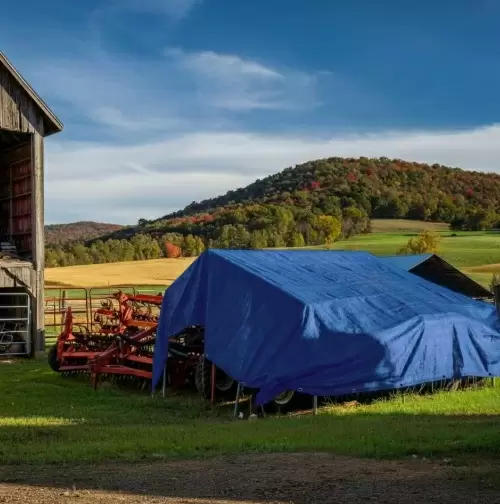
Farming means working with conditions that are not always under your control. Rain, wind, snow, strong sunlight, pests, mud, and changing temperatures can affect crops, hay, livestock, equipment, and supplies.
Tarps and Covers for Agriculture provide farmers with a simple and flexible way to protect these important assets. From covering hay and tractors to creating shade and temporary shelters, Farm Tarps can be put to work throughout the year.
Agricultural Tarps are available in many materials, weights, sizes, and styles. Popular choices include Vinyl Tarps, Poly Tarps, Hay Tarps, Canvas Tarps, Mesh Tarps, Fire Retardant Tarps, Greenhouse Covers, and Custom Tarps.
Choosing the right Tarp for the job can improve protection while making daily farm work easier.
Protecting Hay with Hay Tarps
Hay is one of the most common agricultural materials stored outdoors. Unfortunately, exposure to rain, snow, moisture, and strong sunlight can damage and reduce its quality.
Hay Tarps provide a protective barrier over round bales, square bales, and large hay stacks. They can help keep rain and snow away from stored hay while reducing direct exposure to UV rays.
Good installation is important. Hay tarps should be secured so wind cannot easily lift the material. The cover should also be positioned to shed rainwater instead of allowing water to collect on top.
Airflow is another consideration. Avoid trapping existing moisture inside a tightly covered hay stack. Whenever possible, start with dry hay and allow appropriate ventilation around the storage area.
Crop Protection from Weather and Pests
Crops can face many threats before and after harvest. Heavy rain, strong sunlight, wind, frost, dust, birds, and other pests can all create problems.
Tarps can provide temporary protection for crops in fields, staging areas, and storage locations.
Waterproof Poly Tarps and Vinyl Tarps can protect harvested crops and supplies from rain. Mesh Tarps can provide shade while still allowing air to circulate. Covers can also create a physical barrier that helps limit exposure to birds, debris, and some pests.
Tarps are especially useful when crops are temporarily stored or waiting for processing or transportation. A well-secured cover can provide another layer of protection during this vulnerable period.
Covering Farm Equipment and Machinery
Tractors, mowers, combines, spreaders, trailers, irrigation equipment, and other farm machinery are significant investments.
When indoor storage is not available, Heavy Duty Tarps can help shield equipment from rain, snow, sunlight, dust, dirt, and debris.
Vinyl Tarps are a strong option for demanding outdoor applications because they provide waterproof protection and stand up well to repeated use. Poly Tarps offer lightweight and convenient protection for temporary or seasonal coverage.
Canvas Tarps are useful when breathability is important. Air circulation can help reduce condensation under the cover.
Before covering machinery, allow hot equipment to cool. Protect the Tarp from sharp edges and secure it well enough to reduce flapping and wind lift.
Temporary Livestock Shelters and Farm Structures
Not every farm shelter needs to be permanent.
Tarps can be used to create temporary livestock shelters, shade areas, workspaces, storage areas, wind barriers, and other seasonal structures.
Mesh Tarps are particularly useful for livestock shade because the open weave can reduce direct sunlight while allowing air to move through the covered area. Waterproof Tarps may be better when protection from rain is the main concern.
Temporary Tarp structures can also support seasonal work around barns, pens, feed areas, equipment yards, and crop handling locations.
Any temporary shelter should be properly supported and securely anchored. Livestock structures should also maintain adequate ventilation and safe clearance from animals.
Ground Covers, Weed Control, and Erosion Protection
Tarps can also be very useful on the ground.
Farmers can use appropriate Tarps as groundcovers for temporary soil coverage, work areas, weed suppression, mud control, and protection of materials from direct ground contact.
Solid Tarps are also used in some farming and gardening operations to suppress weeds and prepare soil for planting. By blocking sunlight, properly selected agricultural covers can help manage unwanted vegetation.
Tarps can also provide short-term protection for exposed soil from heavy rainfall and runoff. However, erosion control should be planned carefully. On slopes, drainage areas, or locations where wildlife may come in contact with erosion-control materials, products specifically designed for safe erosion and sediment control may be more appropriate.
Popular Types of Tarps for Agriculture
Different farm jobs call for different Tarp Products.
- Vinyl Tarps – Heavy duty, waterproof Covers for equipment, supplies, storage areas, and demanding outdoor applications.
- Poly Tarps – Lightweight and waterproof Tarps for general farm coverage, crops, equipment, ground covers, and temporary structures.
- Hay Tarps – Designed for covering hay bales and large hay stacks during outdoor storage.
- Canvas Tarps – Durable and breathable covers that work well where airflow and reduced condensation are important.
- Mesh Tarps – Provide shade, screening, airflow, and wind reduction for livestock, crops, fences, and work areas.
- Greenhouse Covers – Clear and transparent sheeting to deliver effective protection for greenhouses and similar structures and shelters.
- Fire Retardant Tarps – Useful where a job, facility, or application requires a Tarp made from material treated or manufactured to meet an applicable flame-retardant standard.
- Custom Tarps – Made to specific dimensions for equipment, machinery, storage piles, structures, and other applications where standard Tarp sizes do not provide the right fit.
Choosing the Best Tarps for Farming Needs
There is no single Tarp that is best for every agricultural application. Start by identifying what you need the Tarp to do.
Do you need waterproof protection?
Vinyl and Poly Tarps are strong choices for applications where keeping rain and snow away is the main goal.
Do you need airflow?
Mesh Tarps are the choice when ventilation is important. Canvas Tarps help eliminate the buildup of condensation underneath.
How long will the Tarp remain outdoors?
For repeated or extended exposure, consider heavier-duty materials such as Vinyl Tarps or Canvas Tarps with strong UV resistance, reinforced hems, and dependable tie-down points.
What are you covering?
A hay stack has different requirements than a tractor, crop storage area, livestock pen, or temporary shelter.
Would a custom size work better?
Large machinery, unusual structures, and unique storage areas may benefit from Custom Tarps. A closer fit can provide better coverage and reduce excess material that can flap in the wind.
Also consider the material weight, thickness, size, UV resistance, waterproof or not, breathability, grommet spacing, tie-down requirements, and the expected weather conditions.
Agricultural Tarps Help Keep Farms Covered
Agriculture depends on preparation. While farmers cannot control the weather, they can take steps to protect the things that keep their operations moving.
The right Agricultural Tarp or Cover can help protect hay, crops, tractors, machinery, livestock areas, supplies, soil, and temporary structures. Tarps and Covers are easy to deploy, available for many different jobs, and useful during every season.
Whether the need is a lightweight Poly Tarp for temporary coverage, a heavy duty Vinyl Tarp for machinery, a breathable Canvas Tarp for feed or equipment, a Mesh Tarp for livestock shade, a dedicated Hay Tarp, or a Custom Tarp made for a specific application, choosing the right Cover can provide dependable protection where a farm needs it most.
If you have questions or need assistance with any of our Tarp Products, please contact Tarps Now at (888) 800-1383 or sales@tarpsnow.com where a knowledgeable and helpful team member located at our Michigan headquarters looks forward to speaking with you.
