
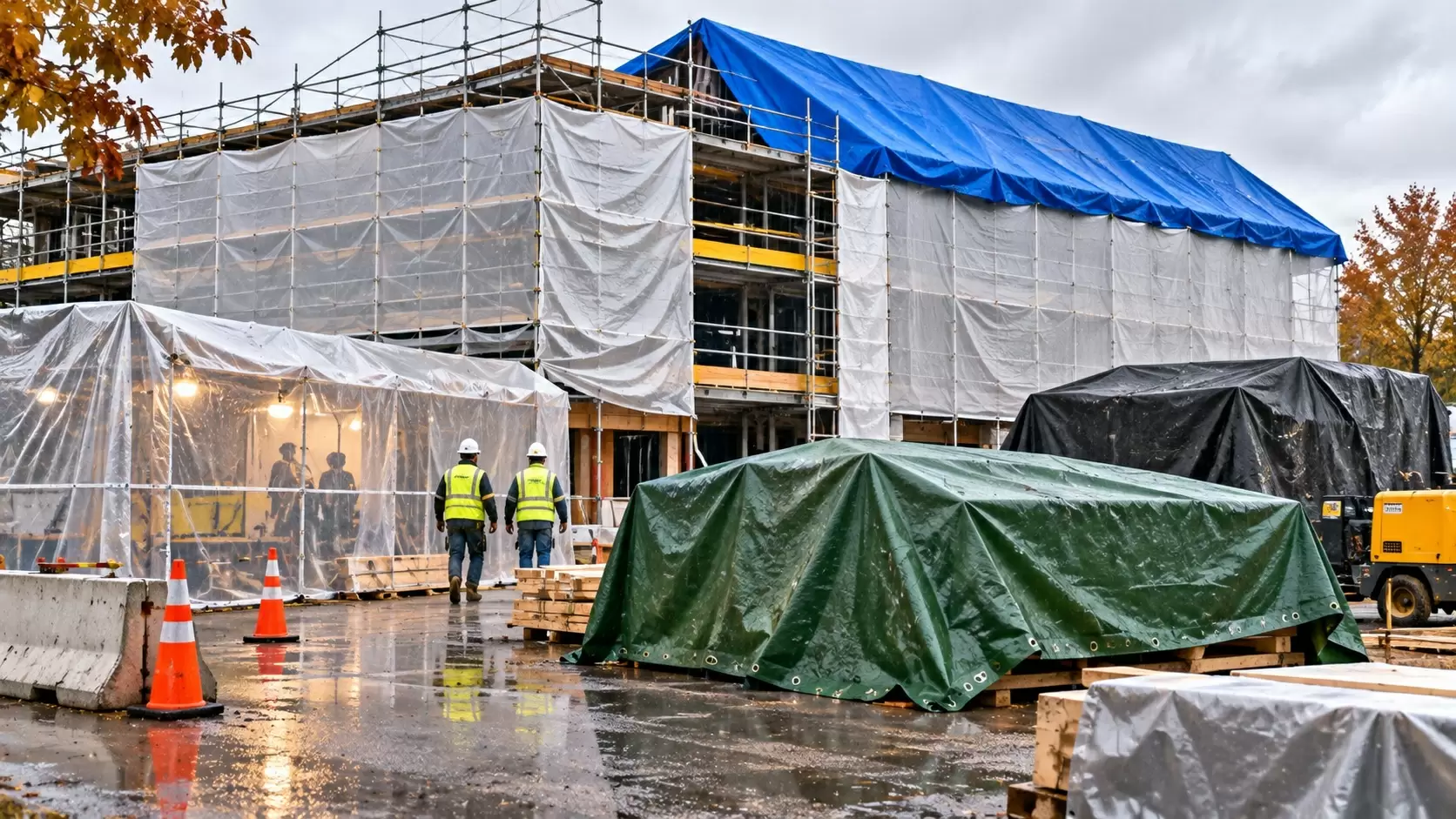
Fall and winter bring new challenges to construction sites across the country. Temperatures drop, daylight hours grow shorter, and changing weather can make even routine construction work more difficult. Rain, strong winds, freezing temperatures, and snowstorms can affect workers, equipment, building materials, and unfinished structures.
For construction companies, contractors, builders, and project managers, preparing for these conditions is an important part of keeping projects safe, productive, and on schedule.
Construction Tarps, Covers, Enclosures, and Safety Netting provide practical ways to protect jobsites from seasonal weather and everyday construction hazards. These products help shield valuable materials, create temporary work areas, control debris, protect workers and pedestrians, and reduce weather-related delays.
From large commercial developments to smaller residential projects, the right protective materials can make a meaningful difference during the colder months.
Why Fall and Winter Jobsite Protection Matters
Autumn weather can change quickly. A mild morning may turn into a rainy afternoon, followed by freezing temperatures overnight. These conditions can damage exposed materials, create slippery surfaces, and interrupt construction activities.
Water can enter unfinished buildings, collect around equipment, and damage supplies. Cold temperatures can affect concrete curing, while wind can scatter lightweight materials and construction debris. Snow and ice add further challenges for workers and equipment operators.
A good seasonal protection plan addresses these concerns before severe weather arrives.
Construction Tarps and related protective products help contractors:
- Protect building materials, tools, equipment, and unfinished structures.
- Create safer working conditions and protect nearby pedestrians.
- Control dust, debris, moisture, and exposure to wind.
- Support cold-weather construction and reduce avoidable delays.
No single Tarp works for every situation. Selecting the right product depends on the jobsite, expected weather, material requirements, and type of protection needed.
Concrete Curing Blankets and Insulated Tarps for Cold Weather
Concrete work becomes more challenging as temperatures fall. Freshly placed concrete needs suitable temperature and moisture conditions to develop strength. When temperatures approach freezing, contractors must take additional steps to protect the curing process.
Concrete Curing Blankets provide an insulating barrier that helps retain heat and reduce exposure to cold air during the concrete curing process. These blankets are placed over newly poured slabs, foundations, sidewalks, and other concrete surfaces to support proper curing conditions.
They are especially useful for commercial foundations, roadwork, parking areas, and other projects that continue into late fall and winter.
Insulated Tarps offer similar protection for a wider range of applications. They can cover building materials, exposed equipment, temporary enclosures, piping, and other temperature-sensitive areas.
Insulated covers are available with different foam thicknesses and durable outer materials. The appropriate insulation level depends on expected temperatures, exposure, and project requirements.
Contractors should remember that insulated blankets retain heat but do not generate it. Extremely cold conditions may require supplemental heating and temperature monitoring as part of a complete cold-weather concrete protection plan.
Building Enclosure Tarps and Containment Tarps
Unfinished buildings often have exposed walls, windows, roofs, and structural openings. During fall and early winter, these areas allow wind, rain, and cold air to enter active workspaces.
Building Enclosure Tarps help create temporary barriers around structures and work areas. They can cover exposed building sections, scaffolding, open walls, and other areas that need protection from changing weather.
These enclosures can make it easier to continue certain construction activities during colder conditions. They also help limit the movement of dust and debris beyond the work area.
Containment Tarps are designed to isolate work zones and help control the spread of construction debris, dust, and other materials. They are useful during demolition, restoration, exterior repairs, and industrial maintenance.
Containment systems may also support environmental controls during activities such as surface preparation, coating removal, and building renovations.
For work involving hazardous materials, contractors must use containment systems that meet the applicable project specifications and regulations.
Both Building Enclosure and Containment Tarps are available in different materials, weights, and sizes. Fire retardant options are important where jobsite rules or building codes require them.
Poly Sheeting for Construction Moisture Protection
Poly Sheeting is one of the most versatile protective materials used on construction sites. Lightweight, flexible, and easy to install, Polyethylene Sheeting /Plastic Sheeting provides a practical barrier against moisture, dust, and dirt.
During fall and early winter, contractors use Poly Sheeting to protect stored materials, cover unfinished openings, separate work areas, and provide temporary weather protection.
It is also commonly used for interior remodeling, painting, demolition, and construction cleanup.
Poly Sheeting is available in several thicknesses, including 5 Mil, 6 Mil, and 10 Mil options. Clear and translucent materials allow light to pass through, which can be helpful when enclosing work areas during shorter fall and winter days.
Reinforced Poly Sheeting and Fire Retardant Poly Sheeting options provide additional choices for demanding construction applications.
For outdoor installations, Sheeting must be properly secured and supported to handle anticipated wind and weather conditions.
Scaffold Debris Netting and Safety Debris Netting
Construction safety remains essential throughout the year, but fall winds and winter weather can increase certain risks.
Scaffold Debris Netting helps contain lightweight debris, dust, and small materials around scaffolding and elevated work areas. It is commonly installed along building exteriors during renovation, masonry, painting, and construction projects.
The Netting provides a protective screening layer while allowing varying levels of airflow, depending on the material.
Safety Debris Netting is used in engineered systems designed to catch or contain falling construction debris. It can be installed beneath elevated work areas, around building perimeters, or in other locations where falling materials pose a risk.
These products are especially valuable on urban construction sites, where pedestrians, vehicles, and neighboring properties may be close to active work.
Scaffold Screening and Debris-Catching Safety Netting serve different purposes and should not be treated as interchangeable. Netting must be selected, installed, and inspected for its intended use.
Contractors should also consider the additional wind loads that Scaffold Netting and enclosure materials may place on supporting structures.
Orange Barrier Safety Fencing for Worksite Boundaries
Fall and winter construction can create changing site conditions. Excavations, uneven ground, stored materials, and equipment movement may become harder to see during poor weather or shorter daylight hours.
Orange Barrier Safety Fencing helps identify restricted areas and establish visible boundaries around construction activities.
Its bright color makes it easy to recognize around excavations, temporary work zones, landscaping projects, and areas where pedestrians should not enter.
Contractors also use orange fencing to separate active construction zones from public walkways and nearby property.
Barrier Fencing is lightweight, flexible, and relatively easy to install or relocate as projects progress.
However, it is primarily a visual warning and access-control aid. It does not replace rigid barricades, guardrails, or other protective systems required for serious fall, traffic, or excavation hazards.
Roof Tarps and Drain Tarps for Rain and Snow
Unfinished roofing projects and exposed building sections are particularly vulnerable to fall rain and early winter storms.
Roof Tarps provide temporary protection for roof openings, damaged roofing materials, and unfinished construction areas. They help reduce water intrusion until permanent roofing work can be completed.
Heavy Duty Poly Tarps and Vinyl Tarps are commonly used for temporary roof protection because of their waterproof materials and durable construction.
Proper installation is essential. Roof Tarps must be secured without creating additional damage, and workers should avoid unsafe installation during strong winds, ice, or other hazardous conditions.
Drain Tarps, also known as Leak Diverters, address water problems inside buildings.
These specialized Covers are suspended beneath leaking ceilings, roof sections, pipes, or equipment. They collect dripping water and direct it through a connected hose toward a suitable drainage location.
Drain Tarps can help protect floors, tools, machinery, and stored materials while repairs are arranged.
These Tarps are particularly useful in commercial buildings, warehouses, industrial facilities, and construction projects where temporary leaks could interrupt ongoing work.
Truck Tarps and General Tarps for Equipment and Supplies
Construction projects depend on a steady supply of lumber, steel, insulation, tools, machinery, and other materials. Fall rain and early winter snow can damage these supplies before they are installed.
Truck Tarps help protect materials during transportation and temporary storage. Heavy Duty Vinyl Truck Tarps are commonly used for flatbed loads, machinery, lumber, and steel.
The Trucking Covers provide strong, waterproof protection against rain, road spray, and changing weather.
Proper load securement remains necessary, as a Tarp alone is not a substitute for required cargo restraints.
Heavy Duty Poly Tarps provide flexible protection throughout the jobsite. Poly Tarps, Vinyl Tarps, and Canvas Tarps are available in many sizes, colors, material weights, and performance levels.
Waterproof Tarps are useful for protecting supplies, covering equipment, and shielding work areas from precipitation.
Water Resistant Canvas Tarps can be useful where breathability is desired, while Waterproof Vinyl and Poly Tarps are better choices when preventing water penetration is the priority.
Custom Tarps can also provide a tailored fit for unusual equipment, structures, and material storage areas.
Fire Retardant Tarps for Construction Safety
Fire safety is an important consideration on construction sites, especially when temporary enclosures are used around welding, cutting, grinding, heating, and other activities that may create ignition hazards.
Fire Retardant Tarps are manufactured with materials or treatments designed to meet specified flame-resistance requirements.
They are available in several materials, including vinyl, poly, canvas, and certain specialty fabrics.
Fire Retardant Tarps may be used for temporary construction enclosures, material protection, containment areas, and designated work zones where the specified product is suitable.
Some products meet recognized flame testing standards such as NFPA 701, CPAI-84, ASTM E 84 (Class A), and California State Fire Marshal F-121.2.
However, fire retardant does not mean fireproof. A Tarp that meets a flame-spread test is not automatically suitable as a welding blanket or for direct exposure to sparks and molten metal.
Contractors should verify product certifications and select purpose-built welding protection where required.
Choosing the Right Construction Tarps for the Season
Successful fall and winter construction protection begins with planning.
Before purchasing Tarps or installing temporary barriers, contractors should consider the type of work, expected weather, length of exposure, and surrounding environment.
A Tarp intended for short-term material storage may not be suitable for a large building enclosure. Likewise, a lightweight Poly Tarp may work well indoors but require stronger support or a heavier material for outdoor use.
Important factors include waterproof performance, UV resistance, tear strength, material weight, fire retardant requirements, attachment methods, and overall size.
Cold-weather flexibility is another consideration, especially for covers that will be handled or repositioned in freezing conditions.
Proper installation and regular inspection are just as important as selecting the correct product. Wind, snow accumulation, and changing temperatures can place additional stress on temporary coverings.
Contractors should check tie-downs, seams, grommets, supports, and drainage conditions throughout the season.
They should also remove or replace damaged materials before they create additional hazards.
Keep Construction Projects Moving with Tarps Now
Fall and early winter do not have to bring construction activity to a standstill. With the right preparation and protective products, contractors can better manage seasonal weather while protecting workers, the public, equipment, supplies, and unfinished structures.
From Concrete Curing Blankets and Insulated Tarps to Building Enclosures, Scaffold Netting, Roof Tarps, Containment Products, and Heavy Duty Waterproof Tarps, construction protection involves many different materials working together.
Tarps Now offers a broad selection of Construction Tarps, Covers, Sheeting, Netting, and Safety Products for commercial, industrial, and residential projects.
Stock sizes and custom-made options help contractors find protection suited to their specific applications.
Whether the project involves protecting a concrete foundation, enclosing a building, securing construction materials, or preparing for an approaching winter storm, the right Tarp products can help reduce exposure and support a more productive jobsite.
Explore Construction Production Solutions or contact the knowledgeable customer service team at the company's Michigan headquarters.
Call (888) 800-1383 or email sales@tarpsnow.com for product information and assistance with standard or custom construction Tarps.
