
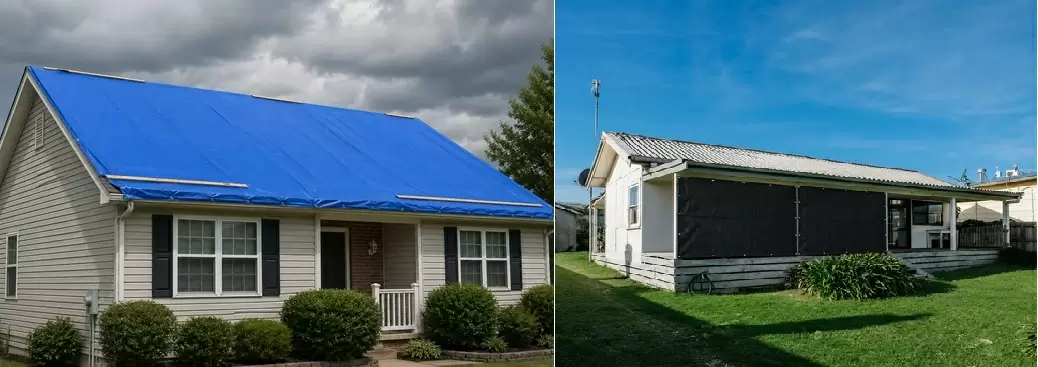
Severe weather can arrive quickly and leave homes, businesses, jobsites, equipment, and outdoor property exposed to damage. Heavy rain, strong winds, flying debris, snow, and ice can all create problems before, during, and after a storm.
Storm Tarps provide a practical way to prepare for severe weather and help protect property when damage occurs. Waterproof Tarps are especially useful because they create a barrier against rain, snow, and moisture. Mesh Tarps and Hurricane Mesh Tarps can also play an important role where wind, debris, shade, and containment are concerns.
From severe thunderstorms and tornadoes to hurricanes and snowstorms, having the right Tarps available before bad weather arrives can make storm preparation and recovery easier.
Why Storm Tarps Are Important
Storm protection is often about creating an effective barrier between valuable property and the elements. A strong, properly selected Tarp can cover a roof, equipment, building materials, supplies, vehicles, outdoor furniture, machinery, and many other items.
Tarps can be useful before a storm to secure and cover property. They can also become especially important after severe weather has passed.
If a storm damages a roof or structure, a Waterproof Tarp can provide temporary protection against additional rain until permanent repairs can be completed. Temporary Roof Tarps are widely used following major storms for exactly this reason. The U.S. Army Corps of Engineers' Operation Blue Roof, for example, uses reinforced plastic sheeting to temporarily cover qualifying storm-damaged roofs until permanent repairs can be made.
Storm Tarps should be viewed as temporary protection rather than a replacement for permanent repairs. They also need to be installed safely and securely.
Insurance companies commonly require temporary coverings using Waterproof Tarps to help prevent additional loss before sending an adjuster to assess your property. It is always suggested to contact your insurer immediately and document all damage with photographs and receipts when using any repair materials. The secondary damage, the losses after the initial event are often greater.
Storm Tarps for Severe Thunderstorms and Tornadoes
Severe thunderstorms can bring heavy rain, hail, damaging winds, and flying debris. Tornado-producing storms can cause even more serious structural damage.
Waterproof Tarps can help cover outdoor equipment, construction materials, machinery, supplies, and other property before storms arrive. After the weather has passed, Tarps can be used to cover damaged roofing, broken sections of structures, exposed building materials, and other vulnerable areas.
A Poly Tarp is often a practical choice for these situations because it is lightweight, waterproof, easy to handle, and available in many sizes.
Heavy Duty Vinyl Tarps offer another option when greater strength, abrasion resistance, and durability are needed.
Safety always comes first following a tornado or severe thunderstorm. Never attempt to install a Tarp during dangerous weather. Damaged roofs, unstable structures, wet surfaces, debris, and downed electrical lines can create serious hazards.
Hurricane Tarps for Wind and Rain Protection
Hurricanes combine several weather threats at once. Heavy rain, extreme winds, wind-driven debris, and flooding can affect large areas for hours or even days.
Waterproof Tarps are valuable before and after these storms. They can protect equipment and supplies before landfall and provide temporary protection afterward for any damaged structures.
Poly Tarps, Vinyl Tarps, and Waterproof Canvas Tarps can be used to shield equipment, supplies, construction materials, and other property from rain and moisture.
Hurricane Mesh Tarps offer a different type of protection. Rather than creating a solid waterproof barrier, mesh allows air to pass through the material. This can reduce the wind pressure that a solid covering may experience.
Hurricane Mesh Tarps can be useful as barriers, screens, and protective coverings around structures and other exposed areas. They can help reduce exposure to wind-driven debris while providing a durable protective layer.
The best choice depends on the application. When stopping water is the priority, use a Waterproof Tarp. When airflow and wind management are important, a Mesh Tarp or Hurricane Mesh Tarp may be the better solution.
Snowstorm and Winter Weather Protection
Storm Tarps are not limited to warm-weather storms.
Snow, freezing rain, sleet, and ice can expose equipment, materials, firewood, outdoor furniture, vehicles, and supplies to prolonged moisture. Tarps can help keep these items covered before the snow begins.
Waterproof Tarps are particularly useful because melting snow can create as much of a moisture problem as the snowfall itself.
Tarps can also make cleanup easier. Covering certain outdoor materials before a storm can reduce direct exposure to snow and ice.
However, care should be taken to avoid excessive snow accumulation on a Tarp. Snow can become extremely heavy, particularly when wet. Covers should be installed so that water and snow can shed whenever the application allows.
Popular Types of Storm Tarps
Different storms and applications call for different materials. Some of the most useful choices include:
- Poly Tarp – Waterproof, lightweight, economical, and easy to handle. Excellent for emergency covers, roofs, equipment, supplies, and general storm preparation.
- Vinyl Tarps – Heavy-duty waterproof protection for demanding applications where strength, abrasion resistance, and longer service life are important.
- Clear Vinyl Tarps – Waterproof protection that also provides visibility and allows light into patios, porches, work areas, enclosures, and other spaces.
- Waterproof Canvas Tarps – Combine waterproof protection with the traditional look and feel of canvas. Useful for equipment, supplies, outdoor property, and applications where breathability may be beneficial.
- Water Resistant Canvas Tarps – Help protect against light moisture while providing breathable coverage. They are best used where complete waterproof protection is not required.
- Mesh Tarps – Allow airflow while providing shade, screening, containment, and a degree of protection from wind and debris.
- Hurricane Mesh Tarps – Designed for demanding wind-related applications where strength, airflow, and barrier protection are important.
Understanding the difference between waterproof, water resistant, and mesh materials is important. A Water Resistant Canvas Tarp, for example, should not be selected when complete waterproof protection is required.
Choosing the Right Storm Tarp
Start by identifying what you need to protect and the weather threat you expect to face.
For heavy rain and water intrusion, choose a Waterproof Tarp. For demanding commercial or industrial conditions, a heavier Vinyl Tarp may provide the durability needed. Clear Vinyl works well when visibility is important. Canvas can be a good choice for equipment and materials where a breathable fabric is preferred.
Mesh Tarps are better suited to applications where airflow is necessary. Hurricane Mesh Tarps can be especially valuable in areas regularly exposed to tropical storms and hurricanes.
Size is equally important. The Tarp should provide enough material to completely cover the required area while allowing adequate overlap for secure attachment.
Grommets, reinforced edges, tie-down points, material weight, thickness, UV resistance, and overall construction should also be considered.
Prepare Before Severe Weather Arrives
One of the best times to purchase Storm Tarps is before they are urgently needed.
Storm forecasts can lead to sudden demand for Tarps and other emergency supplies. Keeping several appropriate sizes on hand can make it easier to protect property when severe weather threatens.
A basic storm preparation supply can include Waterproof Tarps, ropes or tie-downs, appropriate fasteners, repair tape, and other installation accessories. Commercial operations, contractors, property managers, municipalities, schools, farms, and homeowners may benefit from maintaining their own supply based on the property and equipment they need to protect.
Tarps should be inspected before storm season. Check for tears, damaged grommets, worn edges, or other problems that could reduce performance.
Protection Before and After the Storm
No Tarp can prevent a hurricane, tornado, severe thunderstorm, or snowstorm. What the right Tarp can do is provide another layer of practical protection.
Before storms, Tarps can help shield equipment, materials, supplies, and outdoor property. After storms, Waterproof Tarps can cover damaged areas and help limit additional exposure to rain and moisture while repairs are arranged.
Poly Tarps, Vinyl Tarps, Clear Vinyl Tarps, Waterproof Canvas Tarps, Water Resistant Canvas Tarps, Mesh Tarps, and Hurricane Mesh Tarps each provide different advantages.
Keeping the right Storm Tarps ready and understanding how each material works can make weather preparation more organized and storm recovery a little easier.
If you have questions or need assistance with any of our protective products, please contact Tarps Now at (888) 800-1383 or sales@tarpsnow.com where a knowledgeable and helpful team member located at our Michigan headquarters looks forward to speaking with you.
