
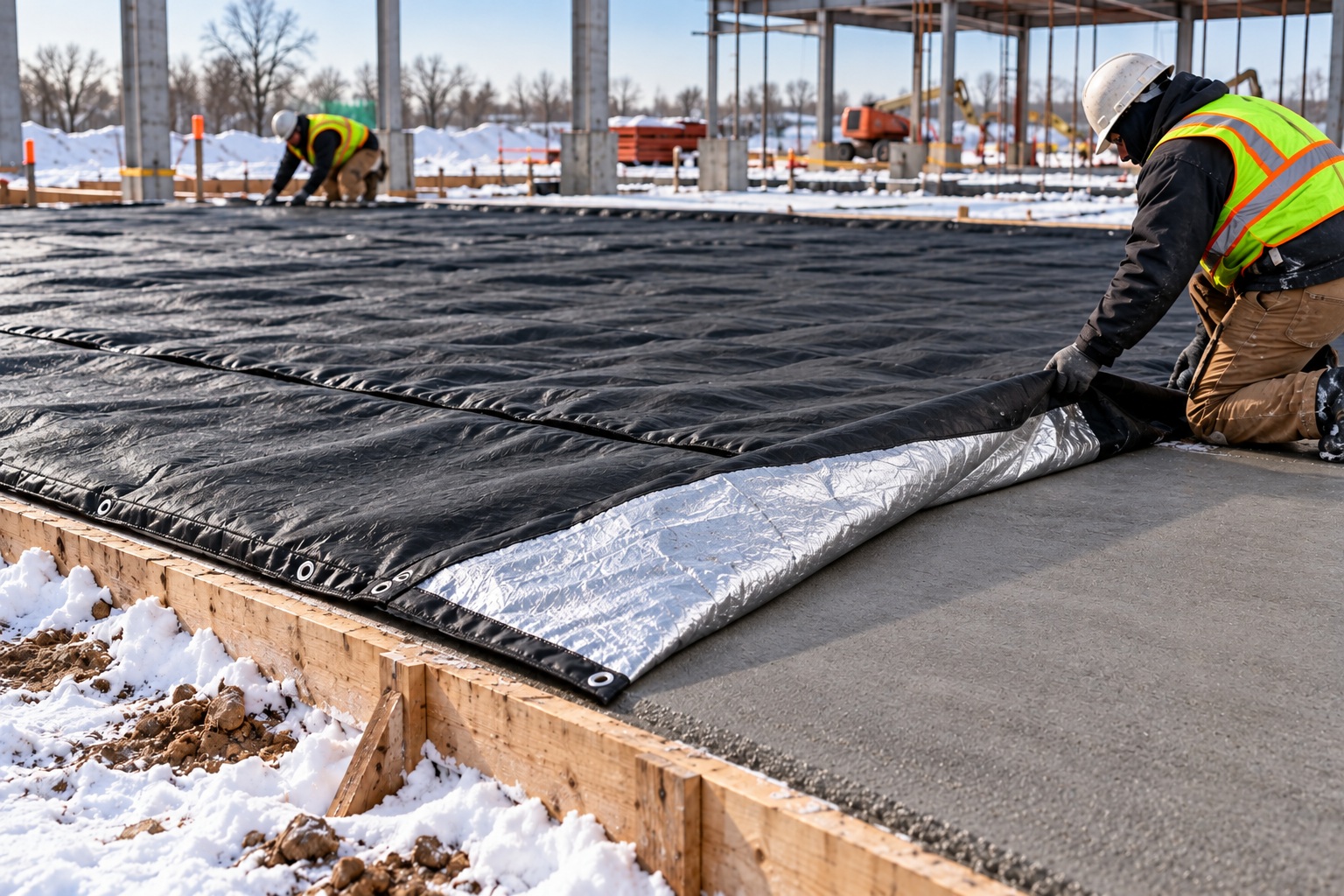
As fall temperatures drop and winter approaches, cold weather brings new challenges for construction crews, contractors, businesses, and property owners. Freezing temperatures, snow, ice, and harsh winds can damage materials, slow projects, and increase costs. Having the right protective covers in place can make a major difference.
Insulated Tarps and Concrete Curing Blankets provide practical solutions for seasonal challenges. These heavy duty covers help retain heat, reduce exposure to freezing conditions, and protect concrete, equipment, and materials from cold weather.
Whether used on a busy construction site, around industrial equipment, or for outdoor storage, insulated covers can help extend the working season. Understanding their features, benefits, and proper use is an important part of preparing for the colder months.
What Are Insulated Tarps and Concrete Curing Blankets?
Insulated Tarpsare protective covers designed to reduce heat loss and help maintain temperatures. Unlike Standard Tarps, which mainly provide protection from rain, wind, and debris, Insulated Tarps feature multiple layers that create a thermal barrier.
Most Insulated Tarps have durable outer layers made from materials such as polyethylene, with foam or another insulating material inside. This construction helps slow the transfer of heat between the protected surface and the surrounding air.
Concrete Curing Blankets are a specialized type of insulated cover used to protect newly poured concrete. They help retain the warmth needed for concrete to gain strength during cold weather.
Although these products share similar construction and thermal benefits, their applications can differ. Insulated Tarps are often used for general protection, while Concrete Curing Blankets are designed for concrete placement and curing operations.
Both products are available in various sizes and insulation configurations to meet different job requirements.
Why Concrete Needs Protection During Cold Weather
Concrete curing is one of the most important reasons contractors use insulated blankets.
Fresh concrete needs suitable temperatures and moisture conditions to develop strength. As temperatures fall, the chemical reaction between cement and water, known as hydration, slows down. This can delay strength development and affect project schedules.
Freezing temperatures create even greater concerns. If concrete freezes before developing sufficient early strength, it can suffer permanent damage. Cracking, surface deterioration, and reduced durability may result.
Concrete Curing Blankets help address these risks by slowing heat loss from newly placed concrete.
They retain some of the heat produced during hydration and help protect the concrete from rapid temperature changes. This allows contractors to maintain more suitable curing conditions, particularly during cold nights and early winter weather.
For best results, Concrete Curing Blankets should be part of a complete cold weather concrete plan. Contractors must still monitor temperatures, follow appropriate curing procedures, and use supplemental heat when needed.
Types of Insulated Tarps and Concrete Curing Blankets
Different applications require different levels of protection. Selecting the right product depends on expected temperatures, exposure, job duration, and the material being protected.
Insulated Tarps
General-purpose Insulated Tarps provide thermal protection for construction materials, equipment, temporary work areas, and other outdoor applications. Their layered construction helps reduce heat loss and limit exposure to cold air.
These covers are useful for industrial operations, temporary enclosures, equipment protection, and construction projects that continue through the winter.
Concrete Curing Blankets
Concrete Curing Blankets are designed to help maintain proper temperatures during the early stages of concrete curing. They are commonly used on foundations, sidewalks, driveways, slabs, and other newly poured surfaces.
Their insulating layers help preserve heat and reduce the risk of early freezing. Different insulation thicknesses and performance levels allow contractors to select blankets based on job conditions.
Heavy Duty Insulated Covers
For demanding construction and industrial environments, heavier insulated covers offer durable outer materials and thermal protection. They may be suitable for repeated use, larger work areas, and applications where covers face regular handling and harsh weather.
The best choice depends on the actual insulation rating, durability, size, and intended application rather than weight alone.
Benefits of Insulated Tarps and Concrete Curing Blankets
Insulated covers provide several advantages during the colder months.
Temperature Protection: Insulated materials slow heat loss and help maintain more stable temperatures around protected surfaces and materials.
Improved Concrete Curing Conditions: Concrete Curing Blankets help retain warmth during early curing, supporting proper strength development when used with suitable cold weather procedures.
Reduced Weather Delays: Properly protected work areas and materials can help contractors continue operations during colder periods.
Protection for Equipment and Materials: Insulated Tarps provide an additional barrier against harsh weather and temperature changes.
Energy Efficiency: When used as part of a properly designed heated enclosure, insulated covers may help reduce heat loss and heating demands.
Reusable Protection: Many Insulated Tarps and Concrete Clankets can be cleaned, stored, and reused across multiple projects when maintained correctly.
These benefits can help improve jobsite efficiency, protect valuable materials, and reduce avoidable weather-related costs.
Strategies for Using Concrete Curing Blankets Effectively
Proper installation is just as important as choosing the right cover.
Before placing concrete, contractors should review weather forecasts and plan for expected temperature changes. Cold weather protection may be necessary even when daytime temperatures are above freezing, especially if overnight conditions become much colder.
Concrete temperatures should be checked during placement and throughout the required protection period. The correct temperature range depends on the concrete mixture, structural requirements, and applicable construction standards.
After finishing, Concrete Curing Blankets should be placed once the surface can be covered without damage. They should cover the entire exposed area, including vulnerable edges and corners.
Adjacent blankets should overlap to reduce gaps where heat can escape. Covers should also be secured against wind without damaging the fresh concrete.
For larger projects, crews may need multiple blankets or additional insulation around exposed edges and forms.
In extremely cold conditions, insulated blankets alone may not provide enough protection. Heated enclosures or other approved heating methods may be required.
Contractors should also avoid removing blankets too early. Sudden exposure to freezing air can cause rapid cooling and thermal stress.
A planned removal process, based on concrete strength and temperature conditions, helps protect the finished work.
Practical Applications Beyond Concrete
Insulated Tarps have uses well beyond concrete curing.
On construction sites, they can help protect building materials, temporary work areas, and equipment from extreme temperature changes. They may also serve as part of temporary heated enclosures for winter construction and repair projects.
Industrial facilities use Insulated Covers to help protect temperature-sensitive materials, stationary equipment, and work areas exposed to cold conditions.
Warehouses and commercial operations may use Insulated Tarps as temporary thermal barriers in areas where maintaining temperatures is important.
Agricultural operations can also benefit from insulated covers for selected equipment, supplies, and storage applications. Their use should be matched to the specific temperature and ventilation needs of the materials being protected.
Insulated Covers are also useful during maintenance, renovation, and repair projects when outdoor work must continue during the colder months.
In all these settings, Insulated Tarps slow heat transfer. They do not produce heat on their own, so the level of protection depends on existing warmth, environmental conditions, and any additional heating system.
Choosing the Right Size, Thickness, and Insulation
Not every Insulated Tarp or Concrete Curing Blanket offers the same level of protection.
Before purchasing, consider the expected outdoor temperatures, required protection period, and size of the area being covered.
Insulation performance is especially important. A Concrete Curing Blanket's thermal resistance, often expressed as an R-value, indicates its ability to resist heat flow. Higher R-values generally provide greater insulation, although actual results also depend on installation and environmental conditions.
The durability of the outer material also matters. Covers used on active jobsites should withstand handling, moisture, and repeated placement.
Choose sizes that provide full coverage with enough extra material for overlaps and exposed edges. Larger projects may benefit from multiple blankets that can be positioned and secured more easily.
Finally, consider storage and reuse. Blankets that are properly cleaned, dried, folded, and stored can remain useful for future cold weather projects.
Prepare Now for the Colder Months Ahead
Cold weather can arrive quickly, and waiting until temperatures fall below freezing may leave little time to prepare.
Contractors and businesses can benefit from reviewing their upcoming projects, checking existing protective covers, and identifying where additional insulation may be needed.
Inspect older blankets for tears, damaged seams, or compressed insulation. Replace covers that no longer provide reliable protection.
Plan ahead for concrete pours, temporary enclosures, equipment protection, and outdoor material storage. Having the right covers available before the first major cold spell can help avoid unnecessary delays.
Stay Protected with Insulated Tarps and Concrete Curing Blankets from Tarps Now
As temperatures fall, Insulated Tarps and Concrete Curing Blankets become valuable tools for protecting projects, equipment, and materials.
Tarps Now offers Insulated Tarps and Concrete Curing Blankets for construction, industrial, commercial, and other cold weather applications. These protective covers help contractors and businesses prepare for changing conditions and maintain operations during the fall and winter seasons.
Whether protecting newly poured concrete, covering equipment, or improving thermal protection around a work area, selecting the right insulated cover can make a meaningful difference.
Prepare for winter before freezing temperatures arrive. Explore Insulated Tarps and Concrete Curing Blankets and find the protection your next project needs.
If you have questions or need assistance with any of our products including Insulated Tarps and Concrete Curing Blankets, please contact Tarps Now today at (888) 800-1383 or sales@tarpsnow.com where a knowledgeable and helpful team member located at our Michigan headquarters looks forward to speaking with you.
