
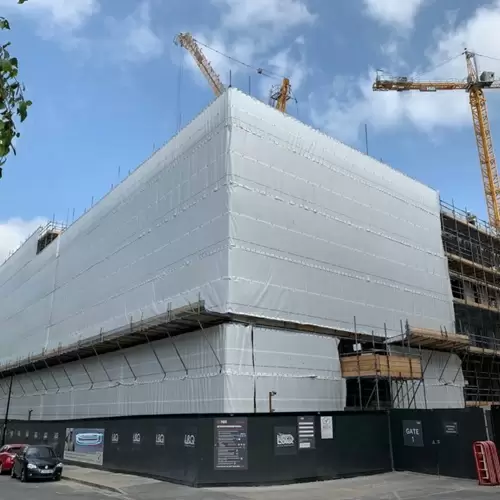
Construction projects rarely take place under perfect conditions. Rain, snow, wind, dust, debris, and changing temperatures can affect workers, materials, equipment, and schedules. Scaffold Construction Enclosures help contractors create a more controlled work areas around active projects.
These products are widely used for commercial construction, building renovation, masonry, restoration, painting, demolition, façade work, roofing, and other demanding jobs. Depending on the project, contractors may use Reinforced Poly Sheeting, Heavy Duty Tarps, Vinyl Tarps, Mesh Tarps, Debris Netting, or Fire Retardant Tarps and Sheeting.
The key is choosing the right material for the job.
What Is Scaffold Sheeting?
Scaffold Sheeting is material installed around scaffolding to help create a temporary barrier between the work area and the surrounding environment. It can cover one side of a scaffold, several levels, or a large part of a building exterior.
Scaffold Tarps and Sheeting can help protect the work area from rain and snow. They can also help control dust, dirt, overspray, and small debris.
A Scaffold Enclosure can be especially helpful when work continues through changing weather. Contractors may use these systems during colder months or during renovation projects where the work area needs greater separation from nearby buildings, pedestrians, vehicles, or occupied spaces.
Not every enclosure needs to be completely solid. Mesh Tarps and Debris Netting may be better choices when airflow is important.
Why Construction Companies Use Scaffold Tarps and Enclosures
A Construction Building Enclosure is about more than covering scaffolding. Contractors use these products to solve several jobsite problems at the same time.
Common benefits include:
- Helping protect workers and work areas from rain, snow, and wind
- Reducing exposure of tools and construction materials to weather
- Helping contain dust, dirt, paint overspray, and light debris
- Providing temporary privacy around active work areas
- Creating temporary enclosures for cold-weather projects
- Helping separate construction activity from nearby public areas
For many projects, scaffold protection can also support productivity. A protected area may allow crews to continue certain types of work when outside conditions would otherwise cause delays.
The level of protection depends on the tarp or sheeting material, the enclosure design, and local weather conditions.
Scaffold Sheeting for Weather Protection
Weather is one of the largest challenges on a construction site.
Rain can affect building materials, exposed surfaces, tools, and equipment. Snow and ice can create additional problems during winter projects. Strong winds can also make exterior work more difficult.
Waterproof Tarps and Reinforced Poly Sheeting can provide a barrier against rain and snow. Heavy Duty Poly Tarps and Vinyl Tarps are other options for areas that require strong weather resistance.
Temporary Building Enclosure Tarps can also help contractors create more manageable spaces for masonry, concrete work, coatings, painting, restoration, and other temperature-sensitive activities.
However, enclosing scaffolding does not remove weather-related risks. Wind remains especially important.
Wind Is an Important Scaffold Enclosure Consideration
Adding solid sheeting to scaffolding changes how the scaffold reacts to wind.
A large Tarp can act much like a sail. Wind pressure that might normally pass through an open scaffold can push against the enclosed structure.
For this reason, contractors must consider the scaffold design, anchoring system, ties, attachment points, enclosure size, Tarp material, and expected weather conditions.
Debris Netting allows more air to pass through the material than solid tarps. They may be useful when full waterproof protection is not required.
The scaffold manufacturer, project engineer, safety professionals, and applicable construction requirements should guide decisions involving scaffold loading, anchoring, and enclosure design.
A Tarp should never be treated as a substitute for proper scaffold engineering.
Controlling Dust and Debris
Containment is another major reason contractors use Scaffold Sheeting.
Renovation, demolition, masonry, façade repair, grinding, sanding, painting, and restoration can produce dust and debris. Depending on the work, contractors may need to keep some of that material from spreading into surrounding areas.
Scaffold Debris Netting, Mesh Tarps, Containment Tarps, and Reinforced Sheeting< can help create a more controlled work zone.
Solid materials provide greater separation. Mesh materials provide airflow while still offering a degree of containment and privacy.
The right choice depends on what must be contained, the location of the project, wind exposure, and project requirements.
Construction projects near sidewalks, streets, schools, businesses, hospitals, and occupied buildings may benefit especially from well-planned containment systems.
Choosing Between Poly, Vinyl, Mesh, and Reinforced Material
There is no single scaffold covering that is right for every construction project.
Poly Tarps and Reinforced Poly Sheeting are popular because they combine weather protection with relatively light weight and easy handling. Reinforcement can add strength for more demanding enclosure applications.
Vinyl Tarps provide heavy duty waterproof protection and good resistance to abrasion. They can be useful for repeated or demanding construction applications.
Mesh Tarps and Debris Netting allow airflow through the enclosure. They can provide shade, privacy, and debris control without creating the same solid wind barrier as waterproof Tarp material.
Clear or translucent materials can be useful when crews want more natural light inside an enclosure.
Fire Retardant Poly Sheeting and Fire Retardant Tarps may be needed when a job specification, building owner, facility, or applicable regulation requires flame and fire protection materials.
Contractors should always verify the specifications and certifications required for the individual project.
Fire Retardant Construction Enclosures
Fire safety can be an important issue when enclosing active construction areas.
Temporary enclosures may be located near heaters, welding operations, electrical equipment, generators, or other potential ignition sources. Certain projects therefore call for fire retardant or flame retardant materials.
Available products may include Fire Retardant Poly Tarps, Reinforced Sheeting, Fire Retardant Vinyl Tarps, Fire Retardant Mesh Tarps, Debris Netting, and other specialty containment products.
When a project calls for a particular fire standard, contractors should verify that the specific product meets the required specification. The terms fire retardant and flame retardant should not be interpreted to mean that a material cannot burn.
The complete jobsite fire-safety plan remains important.
Cold-Weather Construction Enclosures
Winter construction creates a separate set of challenges.
Scaffold Tarps and Sheeting can help create temporary exterior enclosures that reduce direct exposure to wind, precipitation, and cold air. Contractors may then use properly designed heating systems to create a more workable environment.
These enclosures can be valuable for masonry, concrete, coatings, painting, façade restoration, and other work that may be affected by low temperatures.
Heating enclosed construction areas requires careful planning. Ventilation, heater clearances, carbon monoxide, fire protection, fuel sources, and manufacturer instructions all need to be considered.
A well-planned enclosure is part of the system, not the entire solution.
Proper Attachment Matters
Even a strong Construction Tarp can fail when it is attached poorly.
Scaffold Tarps may include reinforced hems, grommets, webbing, tie-down points, or other attachment features. Stress should be distributed across the material rather than concentrated at only a few locations.
Loose sheeting can flap repeatedly in the wind. Over time, that movement can place extra stress on grommets, hems, seams, and attachment points.
Contractors should inspect enclosures regularly and look for torn material, loose fasteners, stretched grommets, damaged seams, or changing scaffold conditions.
Inspections become especially important after strong winds, heavy rain, snow, ice, or other severe weather.
Custom Scaffold Tarps for Unique Projects
Construction rarely involves one standard building shape.
Projects may include unusual wall lengths, multiple scaffold levels, corners, roof lines, openings, walkways, equipment, or access areas. Standard tarp sizes may not always provide the best fit.
Containment Tarps and Construction Covers can be manufactured for specific dimensions and applications. Depending on the product, custom options may include different materials, colors, grommet spacing, reinforced edges, webbing, attachment points, or other features.
Custom sizing can help contractors create a cleaner installation while reducing excess material.
Selecting the Right Scaffold Sheeting
Before choosing Scaffold Sheeting or Tarps, consider the actual jobsite conditions.
Start by asking what the enclosure must accomplish. Is the primary goal waterproof protection? Dust containment? Privacy? Wind reduction? Cold-weather work? Debris control?
Then consider the length of the project, expected weather, scaffold configuration, required fire-retardant specifications, attachment method, and whether the enclosure will be reused.
The strongest or heaviest Tarp is not automatically the best option. The best Scaffold Covering is the one that matches the project's Scaffold Sheeting, Construction Tarps, Debris Netting, and Temporary Enclosures are useful tools for contractors facing unpredictable jobsite conditions. These can help protect work areas from weather, contain dust and debris, provide privacy, and support construction during colder months. Products ranging from Reinforced Poly Sheeting and Waterproof Tarps to Mesh Debris Netting and Fire Retardant Materials provide options for many different construction environments. Tarps Now offers a wide range of Construction Tarps, Scaffold Sheeting, Reinforced Poly Sheeting, Vinyl Tarps, Poly Tarps, Mesh Tarps, Debris Netting, Fire Retardant Tarps, and Custom Tarps for commercial and industrial applications. By matching the material to the project and installing it as part of a properly designed scaffold system, contractors can create better-protected and more manageable work environments throughout the year. If you have questions or need assistance with any of our products including Scaffold Sheeting and Enclosure Tarps, please contact Tarps Now at (888) 800-1383 or sales@tarpsnow.com where a knowledgeable and helpful team member located at our Michigan headquarters looks forward to finding you the best solution.
Scaffold Protection That Helps Keep Construction Moving
Thank You!
