
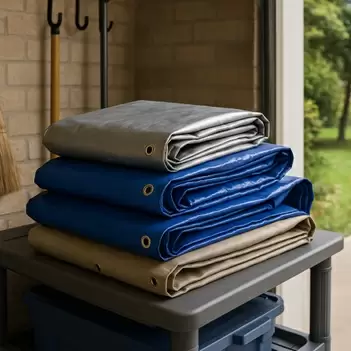
Storms do not wait to show up. When a hurricane is on the way, you have days or hours to prepare. Every minute counts. Other types of serious storms can appear out of nowhere.
Most people run to the store when a storm warning hits, or after there is damage. They grab water, batteries, and sometimes Tarps. But by then, stores are crowded, shelves are empty, and stress is high. That is why smart homeowners plan ahead.
One simple step can go a long way in protection your structures and possessions: storing Tarps before you need them.
Why You Need Tarps on Hand 24/7
Tarps do more than cover holes. They block water, shield windows, protect gear, and hold down debris. A strong Tarp, tied down well, can stop a small problem from becoming a disaster.
Here is what Tarps can do when used quickly:
- Cover a leaking roof before water gets in.
- Block a broken window to keep wind and rain out.
- Wrap outdoor gear, bikes, or grills.
- Keep debris in place to prevent flying hazards.
But all of this depends on availability. If you do not have the tarp ready, the damage can start or get worse before you get back from the store.
Where to Store Your Tarps
You do not need a fancy setup. You just need Tarps in places that are easy to reach, day or night.
Start with these spots:
- Garage: Hang tarps on wall hooks. Use bins for bungees, rope, and gloves.
- Shed: Label a bin or shelf just for storm gear.
- Utility Closet: Roll up smaller tarps for windows and label them.
- Deck Box: Great for mesh tarps or yard tools.
- Storage and Under-Bed Bins: Extra storage space for apartment dwellers.
Keep tools and accessories around to aid the Tarps:
- Rope
- Duct tape
- Gloves
- Utility knife
- Zip ties
- Ladder (stored nearby)
The goal is to grab and go as quickly as possible.
What Types of Tarps to Keep
Not all Tarps work for every job. Think about your home’s weak spots.
Visit Tarps Now to build your kit.
Here’s a simple list to start with:
- Good all-around cover and great for quick roof and hole patches
- Waterproof and UV-treated
- Lightweight and easy to handle. Convenient to store.
2. Vinyl Tarps
- Stronger and more tear-resistant.
- Handles long exposure and rough edges. Waterproof and UV resistant.
- Great for roof and wall protection along with creating temporary shelter.
3. Mesh Tarps
- Use for debris control.
- Good wind flow, less lift risk.
- This style includes Hurricane Mesh Tarps, which help defend your property against intense winds, flying debris, and harsh conditions.
- Wrap fencing, sheds, or loose yard items.
4. Canvas Tarps
- Breathable, good for tools and gear where condensation builds.
- Use outdoors, indoors ,or in garages.
- Strong and reusable. Waterproof, water resistant, and fire retardant options are available.
- Good for grills, generators, and other industrial items.
- Adds an extra layer of safety.
Sizes to consider:
- 5x7 ft for windows
- 8x10 ft for yard gear
- 10x20 ft for sections of roof
- 20x30 ft for full coverage
Label each one with tape, stickers, or tags.
Make Pre-Staging a Habit
Getting Tarps is only step one. It is a good idea to stage them for easy access.
What does this mean? It allows you to know where each Tarp is located and where they will go before a storm. In other words, they are packed, labeled, and ready. (Always make sure the Tarps are fully dried before storing to prevent mold and mildew forming from the dampness)
Treat it like a fire drill.
Here is how to do it:
- Inspect your house and entire property.
- List every area that might need a Tarp.
- Assign a Tarp and tools to each spot.
- Label the Tarp with its use - ex: “Back Window” or “Garage Roof”
- Store the Tarps near those areas if possible.
If a storm is coming and you are ready you will be able to react faster. Less figuring out. No panic.
Build a Tarp Readiness Kit
Make a bin with everything you need to apply Tarps at your home fast.
What to include:
- 3-5 tarps of different sizes
- Rope and bungee cords
- Duct tape
- Work gloves
- Headlamp or flashlight Utility knife
- Sandbags or bricks (for weights)
- Have a ladder nearby
Put this bin in a shed, garage, or hallway. Mark it clearly.
Do a test run once a year. Can you Tarp a roof corner in 10 minutes? Can your family help?
Check and Rotate Each Season
Tarps do not last forever. Heat, time, and use can weaken them.
Use this checklist every spring:
- Pull out every Tarp.
- Look for holes, tears, other weaknesses, or mold.
- Replace worn ones.
- Check labels are still clear.
Buy a few extra Tarps to rotate in. You do not want to discover a bad Tarp when you need it most.
Common Mistakes to Avoid
- Skipping Tarp Prep: Waiting until the storm hits means you are already behind. Keep a Tarp kit ready at all times.
- Underestimating Damage: A few missing shingles can lead to major leaks. Cover them fast to prevent water damage, mold, or rot.
- Mislabeling or No Labels: During a storm, every second counts. Labeled Tarps save time and reduces confusion.
- Not Covering Damaged Areas after a Storm: Secondary damage following a storm can often be worse than the initial impact, making it critical to secure and cover vulnerable areas quickly.
Be Ready, Not Rushed
Waiting until the last second leaves too much to chance. A few simple steps now can save your home.
- Buy the right Tarps for the protection you may need
- Store them in smart and accessible places
- Label and stage them
- Check them twice a year
Tarps Now has what you need. From poly canvas, vinyl, and mesh, every Tarp type is available is many sizes, weights, and even colors.
Buy early. Store well. Stay ready!
Your Next Step
Do not wait for the next storm alert.
Visit Tarps Now and be ready.
Store the Tarps today. Protect your home tomorrow. Be Ready 24/7.
If you have any questions or need help selecting the best Tarps for your situation, please contact us at (888) 800-1383 and sales@tarpsnow.com where one of our exceptional team members located at the Michigan headquarters looks forward to working with you.
Keep Tarps stored and ready before the storm and hurricane season hits. Pre-stage them in easy-to-reach spots like garages or sheds. Use different types and sizes for roofs, windows, and gear. Label them. Pair each with rope, tape, and tools. Check your setup every season. When storms come, you will be ready to act fast and protect your home.
* Please Note *
We Are Running our Tarps Now Monthly Customer Photo Contest for August
Tarps Now is excited to conducting our Monthly Customer Photo Contest, giving you the chance to show off your tarps through our website in action, and win!
How It Works:
We invite all Tarps Now customers to submit photos of tarps, covers, or industrial curtains purchased from us being used in real-world applications. Whether it is a tarp protecting equipment or covering a truck, a creative shelter, a curtain system dividing a warehouse, or whatever application you may have, we want to see how our products are working for you.
Contest Details:
- Prize: A $200 Amazon Gift Card will be awarded to the winning submission each month.
- Deadline: Entries must be submitted by 11:59:59 PM ET on the final calendar day of each month.
- Entry Limit: Each photo can only be submitted once.
- Verification: Only images of Tarps Now products are allowed. Orders and customers will be verified before official entry.
Usage Rights:
By submitting photos, you grant Tarps Now the right to use your images at our discretion for product promotion, social media, website content, and other marketing purposes.
