
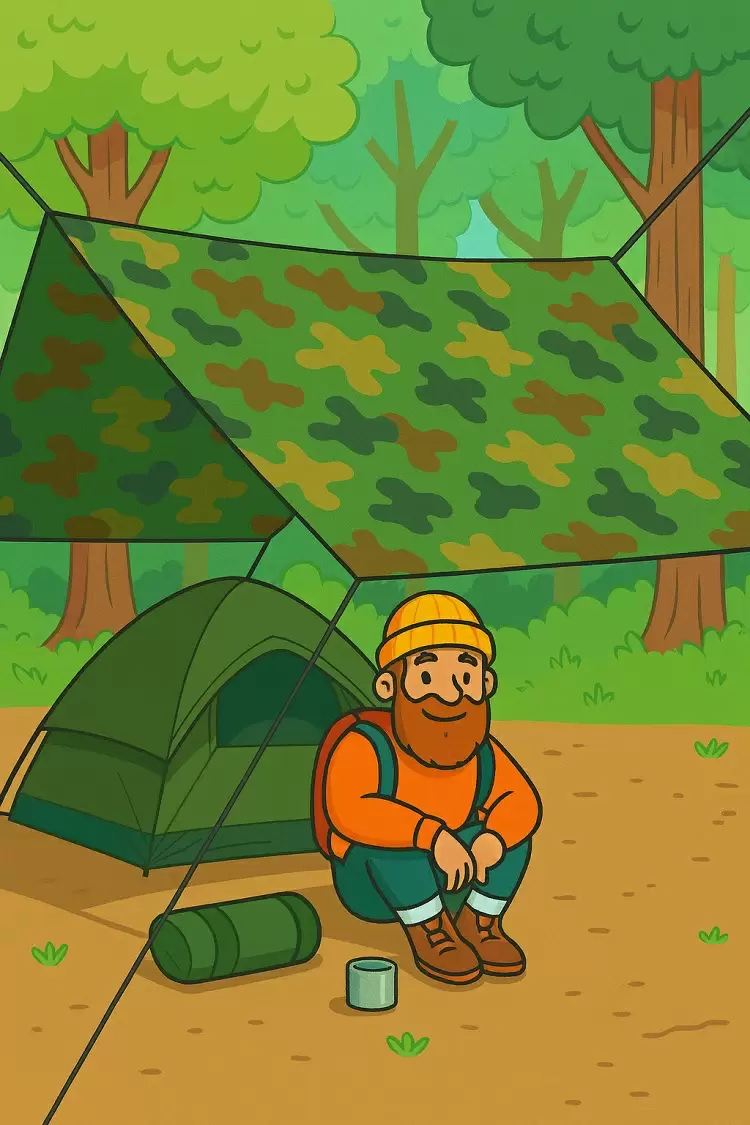
What is the one item in your pack that can save your trip when everything goes wrong? It is not your stove. Not your fancy GPS. It is your Tarp!
Most hikers think of a Tarp as a backup shelter. Just something to throw up in a pinch when a storm rolls in. But that is only part of the story.
A good Tarp can do much more, especially when you know how to use it right.
Tarps Now offers Tarps that are tough, lightweight, and reliable. Effective Heavy Duty Poly Tarps are easy to handle, waterproof, and durable, holding up to the sun, wind, rain, snow, and cold. But what really makes these versatile Plastic Tarps stand out? They help you solve problems that you might not see coming.
A popular Poly Tarp selection favored by campers and hikers is using Camouflage Tarps as a multipurpose, ‘Swiss army knife’ Tarp that is used for blending in with surroundings. Green Camo Tarps can be used to cover an existing tent or for a lean to wilderness shelter or hunting blind on the fly in forest environments. Desert Camo Tarps are favored by hikers and mountaineering enthusiasts.
To follow are 13 smart, trail-tested ways to use a Tarp that go far beyond the usual.
1. Quick Water Collector
Rain comes fast. Sometimes you are lucky enough to be set up when it hits. Other times you have to catch what you can.
A Poly Tarp makes it easy:
- Spread the tarp flat with a slight tilt
- Use rocks, sticks, or your pack to prop one edge higher
- Let water run into a bottle or pot at the low end
If you have cord, tie the corners to trees and use gravity to direct the flow.
This is a great way to fill bottles without dipping into sketchy sources. It is also safer than hoping you find a stream.
You can even set it up overnight. Light rain can still add up while you sleep.
2. Ground Insulation Layer
Even the best sleeping pad cannot stop cold from seeping up from wet ground. A Poly Tarp adds a simple barrier that makes a big difference.
Lay it down under your tent or bivy. Or fold it into a square and place it directly under your sleeping pad.
- Helps trap warmth under you
- Blocks rising moisture
- Keeps gear dry in soggy zones
This trick works well in alpine zones where snow melt makes things damp even when it is not raining. Some hikers fold the Tarp double or triple in the torso area for added insulation where it counts most.
3. Emergency Gear Wrap
Caught in a storm and need to protect your stuff fast? Wrap your backpack or loose gear in a waterproof Poly Tarp and tie it off. This protects it from rain, mud, and even hail.
You can also:
- Use it as a dry workspace for cooking or fixing gear
- Wrap wet clothes separately to keep the rest of your pack dry
- Create a makeshift dry bag using cord or a bungee
On rough days, being able to separate dry from wet makes a big difference in morale.
If you are doing river crossings, wrapping your gear in a waterproof Tarp adds a protective layer in case your pack takes a dip.
4. Bear Bag Hoist or Food Line
Hanging your food at night keeps critters away. A Tarp can help make it happen.
Use the Tarp’s corner grommets to clip in carabiners or tie-off lines. Then attach your food bag and hoist it with a rope over a branch.
Why this works:
- Reinforced grommets hold up better than thin bag loops
- The Tarp spreads weight and prevents tears
- You can bundle multiple bags for group hangs
In wet conditions, you can wrap the food bag in the Tarp for added protection before hanging it. It is a simple trick that turns your shelter gear into part of your bear-safe setup.
5. Trail Marker or Signal Flag
Lost your way? Need help? A brightly colored Tarp is easier to spot from a distance than your jacket or pack cover.
Ways to use it:
- Lay it flat in a clearing to signal aircraft
- Hang it from a tree or bush as a flag
- Wrap it around a stick and wave it on a ridge
If someone is tracking you or if you stray off-trail, a bright Tarp helps rescuers find you faster.
Some hikers cut small squares off spare Tarps and keep them in first aid kits or map cases for emergency signals.
6. Quick Pack Cover or Windbreak
Rain shows up fast. Pulling out a proper rain cover takes time. A waterproof Poly Tarp can be faster. Wrap your pack and tie it off with cord. It does not have to be pretty, just tight enough to keep water out.
Tarps can also block wind while you cook or rest. Stake one side down and use trekking poles or branches to hold the other up.
This helps:
- Keep your stove flame steady
- Stay warm during snack breaks
- Create a calm space to regroup
When you are hiking on exposed ridgelines or open valleys, a windbreak can feel like a game changer when you rest or camp for the evening.
7. Rain Skirt or Poncho Backup
Forgot your rain gear? Or find a rip in your shell? A Tarp can cover you fast.
Wrap it around your waist as a rain skirt. Or cut a head hole and wear it poncho-style.
The Tarp will not fit like a jacket, but it will keep you dry in a pinch.
Tip: Use duct tape or cord to create arm loops or belt ties. Keep the extra slack from flapping in the wind.
Some backpackers pre-cut a Tarp with corner ties just for this use. It is lighter than carrying full rain pants.
8. Privacy Screen or Camp Divider
In busy campgrounds or group trips, you sometimes want a little space. Tarps can provide privacy and help organize space.
String a Tarp between trees to create:
- A private spot to change clothes
- A shaded bathroom area
- A wind barrier for your tent door
This works well in group setups when camps get crowded. It also helps reduce distractions during breaks or solo time.
A Camo or Green Tarp blends in better for low-profile privacy.
9. Hammock Weather Cover
Hammock sleepers already know the value of overhead protection. But you can also hang a Tarp underneath to block wind.
This bottom layer helps trap heat and stops breezes from chilling your back.
Use two Tarps:
- One on top, angled like a roof
- One below, hung a foot under your hammock
Some hikers use small Tarps just at the foot or head to stop wind leaks.
10. Sled or Drag Sheet
In snow, mud, or loose gravel, carrying gear gets rough. Turn your Tarp into a drag sheet.
Place your pack or a bundle in the center of the Tarp, fold the sides in, and pull using a cord tied to the corners.
This saves energy on rough ground or downhill routes. It is also handy for hauling firewood or water jugs.
In winter, you can sled short distances by sitting on a Tarp with your pack in front of you.
It will not glide like a sled, but it will slide better than boots alone.
11. Sun Shelter or Shade Roof
The sun can zap your energy fast. When there is no tree cover, a Tarp gives instant shade. Tie the corners to trekking poles or branches. Angle the roof for airflow.
This gives you:
- A break spot during long climbs
- A safe place to eat without overheating
- Shade for drying gear without direct sun
UV rays wear out both you and your gear. A Tarp blocks both.
12. First Aid or Rescue Stretcher
If someone gets hurt and cannot walk, a Tarp can help others move the person.
Fold it in half. Place the individual on top. Have a helper lift each corner or use long sticks to make handles. This takes teamwork but works in places where a stretcher or sled is not available.
You can also use it to pull someone short distances on some terrains especially snow.
For solo aid, it makes a better splint wrap than a sleeping bag when padding limbs.
13. Drying Rack Cover
Need to dry socks, shirts, or gear after rain? Tarps give you a place to set things out without putting them in dirt.
- Lay it flat and set gear on top
- Use it as a cover over a clothesline
- Place under a log or rock line as a clean base
In humid zones, this helps keep gear from picking up more moisture from wet the ground.
Final Thoughts
A Tarp can be a shelter. But that is only the start. Once you know these tricks, it becomes a full-on trail tool kit.
Tarps Now makes products that hold up when it counts. Strong stitching, solid grommets, and durable materials mean you do not have to worry about failure when conditions turn.
Pack smart with a Heavy Duty Poly Tarp or two. Learn a few tricks. And next time things get rough, your Tarp might just save the day.
What’s the most creative way you’ve used a Tarp on the trail?
A Tarp is not just a backup shelter it is your trail multitool. From catching rainwater and blocking wind to wrapping gear, hanging food, signaling for help, and even hauling firewood, this guide shows 13 unexpected ways to use a Tarp that can save your hike when things go sideways. If you are serious about backpacking, do not just pack a Tarp, learn to use it like a pro.
Thank You!
* One More Thing *
We are Announcing the Tarps Now Monthly Customer Photo Contest
Tarps Now is excited to launch our Monthly Customer Photo Contest, giving you the chance to show off your tarps through our website in action, and win!
How It Works:
We invite all Tarps Now customers to submit photos of tarps, covers, or industrial curtains purchased from us being used in real-world applications. Whether it is a tarp protecting equipment or covering a truck, a creative shelter, a curtain system dividing a warehouse, or whatever application you may have, we want to see how our products are working for you.
Contest Details:
- Prize: A $200 Amazon Gift Card will be awarded to the winning submission each month.
- Deadline: Entries must be submitted by 11:59:59 PM ET on the final calendar day of each month.
- Entry Limit: Each photo can only be submitted once.
- Verification: Only images of Tarps Now products are allowed. Orders and customers will be verified before official entry.
Usage Rights:
By submitting photos, you grant Tarps Now the right to use your images at our discretion for product promotion, social media, website content, and other marketing purposes.
