
Owning a tarp means knowing how to care for it. Tarps are useful tools for homeowners, businesses, and job sites. Good care keeps them working longer and saves you money.
Start by choosing the right tarp for the job. Vinyl, canvas, poly, and mesh each serve different purposes. Using the wrong type can lead to early wear or damage. Need rain protection? Choose a waterproof tarp. Covering a pool or sandbox? A mesh tarp lets water through while keeping debris out.
Once you have the right tarp, install it correctly. Secure it through the grommets to keep it from shifting or blowing away. Do not pull it too tight, too much tension can tear out grommets or damage the fabric. Check your tarps often for wear and fix any problems right away.
Clean tarps regularly with mild soap and warm water. Check the care instructions for anything specific. Always let the tarp dry fully before storing. Store it in a cool, dry place away from direct sunlight.
Follow these simple steps and your tarps will last for years.
Selecting the Best Tarp for your Requirements
Choosing the right tarp starts with the material. Vinyl, clear vinyl, canvas, and polyethylene each offer different strengths. Most tarps come with metal grommets made from brass, nickel, stainless steel, or aluminum for easy tie-down. Here is a quick guide to help you choose:
Vinyl Tarps
Vinyl Tarps are tough, waterproof, and resist mildew and rot. Use them to cover supplies, equipment, vehicles, boats, and RVs. They are lightweight and easy to handle. Options include fire retardant, anti-static, and camouflage versions in many thicknesses, grades, sizes, and colors.
Clear Vinyl Tarps
Clear Vinyl Tarps offer the same strength and waterproof protection as standard vinyl, plus full visibility through the material. Use them as curtains or temporary walls to protect outdoor spaces from rain, snow, wind, and cold, while keeping the view open. They also work well for covering equipment you need to see. They come in 20 and 30 Mil thickness. A fire retardant option is available in 20 Mil.
Canvas Tarps
Canvas Tarps are tough and breathable. The open weave lets air flow through, which prevents moisture from building up underneath. Use them to cover outdoor equipment and large areas. Options include waterproof, water-resistant, fire retardant, awning, and marine versions. Popular styles include drop cloths, duck canvas tarps, and utility bags.
Mesh Tarps
Mesh Tarps are strong, lightweight, and let air flow through. They provide shade and some weather protection. Common uses include shade covers, windscreens, privacy screens, and truck tarps. They come in different shade levels, colors, and specialty versions including fire retardant and Hurricane Mesh Barrier Tarps.
Polyethylene (Poly) Tarps
Poly Tarps are affordable, lightweight, and easy to handle. They are waterproof, rot-resistant, and UV-resistant. Use them to cover roofs, structures, equipment, and supplies, or as a ground cover.
Properly Installing Tarps
Good installation starts with the grommets. Most tarps have grommets spaced evenly around the edges. Use them to attach the tarp to structures with rope, zip ties, bungee cords, clips, or hooks. Connect as many grommets as you can.
Keep the tension even. Too much tension can pull out grommets or damage the fabric. A taut but not over-stretched tarp holds up better in wind and keeps rain and dirt from getting underneath.
Here are a few key tips:
- Choose the right size. Too small means gaps in coverage. Too large means loose material that can become a hazard.
- Keep it taut but not too tight. Over-tightening damages grommets and fabric.
- Secure every attachment point with rope, zip ties, or bungee cords.
- Check the weather. If high winds are expected, add extra fasteners to keep the tarp from blowing away or getting tangled.
Occasionally Inspect Your Tarps for Damage and Wear
Check your tarps regularly for tears, holes, worn fabric, and broken grommets. Catching problems early stops them from getting worse. Regular inspections keep your tarps working well and help you avoid bigger issues down the road.
Common Tarp Repairs
Fix problems as soon as you find them. Tarp Glue and Tarp Tape handle most tears, holes, and abrasions. Grommet Kits let you repair or replace broken grommets. If the tarp is too damaged to fix, replace it.
A few simple habits go a long way:
- Use Tarp Tape or Tarp Glue on small tears and holes right away.
- Replace broken or missing grommets with a Grommet Kit.
- Always use all available grommets when tying down the tarp for maximum hold and protection.
Grommet Kits
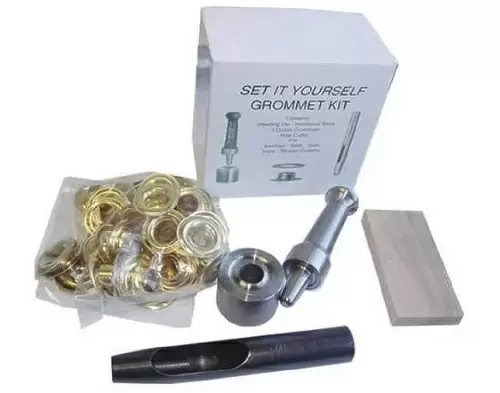
Grommet Kits let you repair, replace, or add grommets to any tarp. Each kit includes grommets, washers, a hole cutter, and a setting die, everything you need in one package.
Kits come in common sizes: #2 (3/8"), #3 (7/16"), #4 (1/2"), #5 (5/8"), and #6 (13/16"). You can also buy grommets and tools separately if needed.
Tarp Repair Tape
Tarp Repair Tape patches rips and tears, reinforces stress points, and stops new damage from forming. It works on poly, vinyl, and canvas tarps and comes in many colors to blend with the material.
It resists water, moisture, acids, chemicals, oils, and UV exposure. Use it on tarps, industrial curtains, boat covers, and more.
Tarp Glue / Tarp Cement
Tarp Glue and Tarp Cement bond vinyl, neoprene, canvas, and other tarp fabrics. They also work on rubber, leather, metal, glass, and tile. The adhesive dries in two to five minutes and holds strong. It is waterproof and resists weather, extreme temperatures, oil, and grease. Available in pint, quart, and gallon sizes.
Seam Sealer
Even waterproof tarps can leak at the seams over time. Seam Sealer fixes this fast. It seals sewn seams and stops water from seeping through. It works on cotton, polyester blends, and synthetic threads.
Use it on tarps, boat covers, awnings, tents, backpacks, and bags. Comes in a 4-ounce bottle.
Cleaning Your Tarps and Covers
Clean tarps last longer. Brush off dirt and debris regularly and remove standing water right away. For light cleaning, a hose works well. For heavier buildup, use warm water and mild dish soap. Tarp Cleaners and Tarp Protectants are also available for best results.
After cleaning, let the tarp dry fully. Lay it flat or hang it in the sun. Flip it over part way through to dry both sides evenly and avoid creases.
Tarp Cleaner
Tarp Cleaner works on vinyl, clear vinyl, polyethylene, nylon, and mesh. It also works on vehicle interiors, car covers, and RV awnings.
It removes dirt, oil, grease, coffee, ink, and tough stains with no greasy residue. It helps prevent fading and cracking, restores color, and blocks UV rays. Available in 16 oz., 32 oz., and gallon sizes. Just spray on and wipe off.
Tarp Protectant
Tarp Protectant preserves vinyl, clear vinyl, polyethylene, rubber, and fiberglass surfaces. It is not for use on canvas.
It protects against fading, discoloration, UV rays, and cracking. It also repels smudges, dust, dirt, and stains. The formula is 100% grease-free, silicone-free, and petroleum-free — safe and non-toxic. No rinsing needed. Just apply and wipe dry.
Available in 16 oz. and 32 oz. spray bottles and 1-gallon and 5-gallon refill containers.
Storing Tarps
Good storage keeps tarps ready for their next use. Follow these simple steps:
- Clean and dry first. Any moisture left on the tarp can lead to mold or mildew during storage.
- Fold or roll neatly. This prevents creasing and keeps the tarp in good shape.
- Store in a dry place. Indoors is best to protect from moisture and weather.
- Keep away from sunlight and heat. Long exposure to either can break down the material.
- Avoid contaminants. Keep tarps away from oil, chemicals, and sharp objects.
- Get them off the ground. Storing directly on the ground can cause moisture absorption and mold.
Providing not only the Products, Tarps Now delivers the Help In Caring for your Tarps
Tarps Now carries a wide range of tarps and all the accessories you need to care for and maintain them. Have a question or need help choosing the right product? Call us at (888) 800-1383 or email sales@tarpsnow.com. Our team in Michigan is ready to help.
Thank you for reading!
